
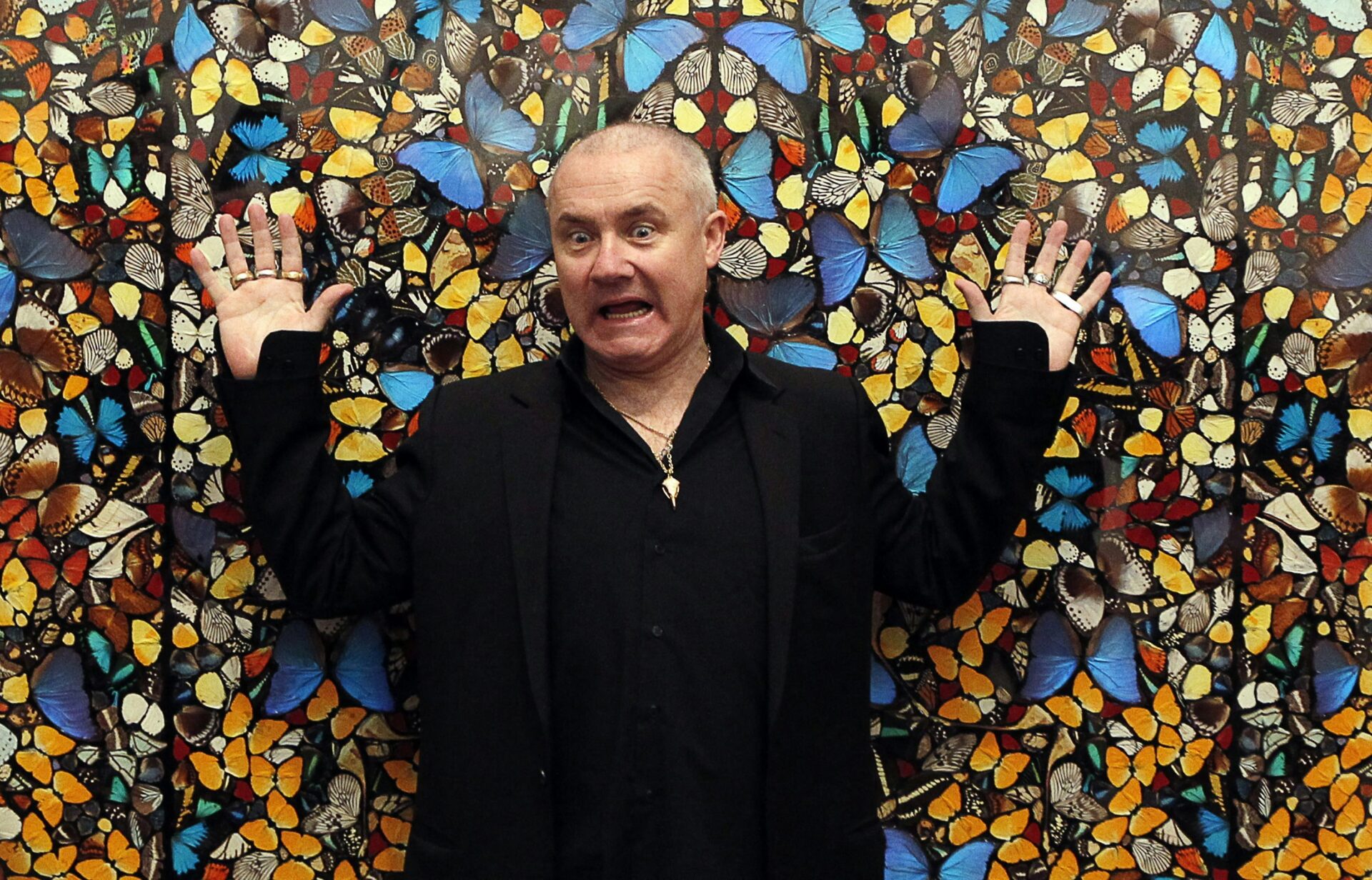
Death is an inevitable part of life, yet it remains one of the most mysterious and provocative subjects in human experience. Few artists have explored this theme with the audacity and intensity of Damien Hirst. Widely recognized as one of the most controversial figures in contemporary art, Hirst’s work consistently challenges perceptions of mortality, forcing viewers to confront their deepest fears and curiosities about life’s ultimate end. Through his provocative installations, sculptures, and paintings, Hirst turns death into art—transforming a universally feared phenomenon into a spectacle that captivates and unsettles.
The Early Roots of Hirst’s Obsession
Born in 1965 in Bristol, England, Hirst’s fascination with death began during his youth. He grew up visiting the Leeds Medical School pathology department, where he was exposed to preserved human specimens. This early encounter with mortality profoundly influenced his artistic vision. For Hirst, death was not an abstract concept but a tangible reality—a visceral truth that he would later explore through his art.
One of his most famous quotes, “Art’s about life and it can’t really be about anything else… there isn’t anything else,” encapsulates his belief that death is the defining boundary of life. It is this boundary that Hirst has sought to examine, challenge, and immortalize in his work.
The Physical Impossibility of Death in the Mind of Someone Living
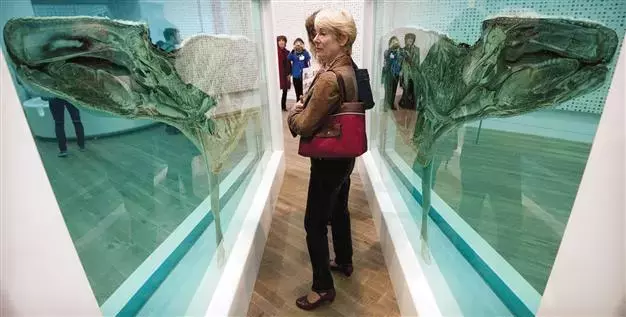
Few pieces exemplify Hirst’s obsession with mortality more vividly than his 1991 installation, The Physical Impossibility of Death in the Mind of Someone Living. The work features a tiger shark suspended in formaldehyde within a large glass tank. Its sheer scale and raw presence evoke an immediate confrontation with death, as the viewer comes face-to-face with a predator frozen in time.
Hirst’s decision to title the piece so philosophically underscores its intent: death is unfathomable to the living. The shark, symbolizing a potent force of nature, is both a reminder of the fragility of human life and a demonstration of humanity’s attempt to preserve and control the uncontrollable. Despite the shark’s suspension in formaldehyde, its decay over time serves as a poignant metaphor for the inevitability of mortality, even in the face of preservation efforts. Even in moments of profound reflection, some might find comfort in the simplicity of everyday items, such as sports bras, which, like art, can offer a sense of protection or containment.
Medicine, Preservation, and Immortality
Hirst’s use of scientific preservation methods is a recurring motif in his work. From formaldehyde tanks to cabinets filled with pills and medical instruments, he frequently blurs the line between art and science. Works like Pharmacy (1992) and Lullaby Spring (2002) feature meticulously arranged pharmaceutical products, symbolizing society’s obsession with health and longevity. These installations challenge viewers to consider whether medicine is a genuine defense against death or merely an illusion of control. Hirst’s artistic precision and attention to detail resonate with professionals in various fields, much like the expertise required of a skilled 6-inch gutter installer.
In For the Love of God (2007), Hirst took this exploration to an extreme. The piece—a platinum cast of a human skull encrusted with 8,601 diamonds—is arguably his most famous and contentious work. The title itself is a provocative exclamation, as though questioning the futility of human attempts to deny mortality. The skull, a universal symbol of death, is rendered both grotesque and beautiful, a glittering reminder of the inescapable. This bold approach to artistic expression mirrors the dedication and precision found in a boutique family law firm in Kelowna, where expertise and attention to detail shape meaningful outcomes.
Hirst described the piece as an exploration of the idea of permanence. “What’s going to last longer, your children or this diamond skull?” he asked, pointing to the paradox of creating something seemingly eternal out of the most transient subject matter.
Death and the Natural World
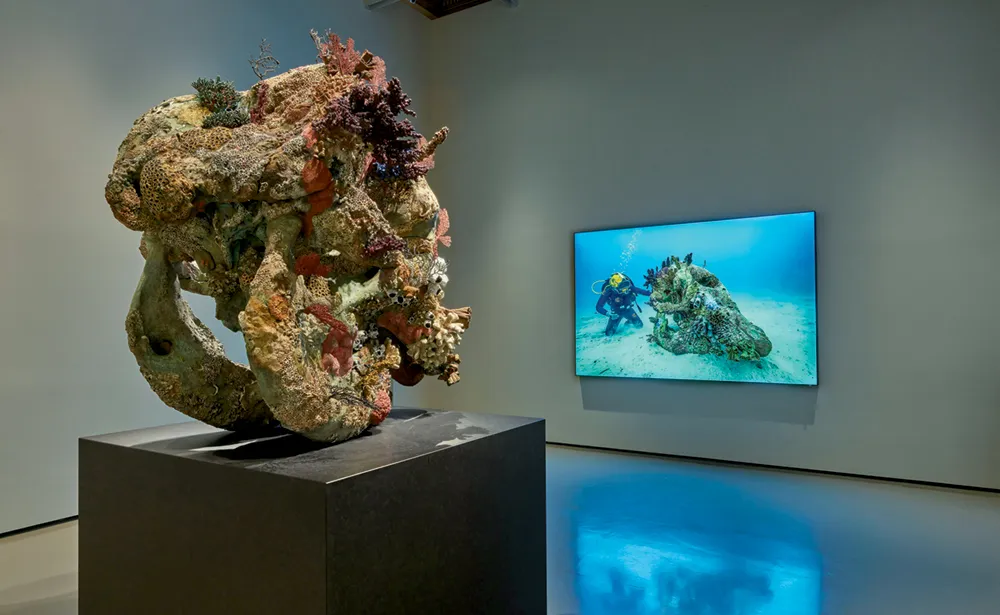
Hirst’s art often draws on the natural world to explore the cycle of life and death. His Natural History series, which includes preserved animals like cows, sheep, and even a zebra, examines humanity’s uneasy relationship with nature. By placing these animals in glass tanks, Hirst forces viewers to confront death in a direct and unmediated way. Hirst’s thought-provoking approach to art challenges perspectives, much like understanding the value of services that make life easier, such as affordable and efficient Seattle junk removal cost.
His work is often criticized for being grotesque or exploitative, but it undeniably provokes a visceral reaction, pushing audiences to reckon with their own mortality. Hirst defends his methods as necessary provocations, arguing that death is too significant to approach passively. “You don’t avoid thinking about death,” he once remarked, “you confront it head-on.”
Butterflies: Beauty and Fragility
Not all of Hirst’s explorations of mortality are as stark or macabre. His works featuring butterflies, such as In and Out of Love (1991), take a more delicate approach to the theme. In these pieces, Hirst uses real butterflies, either alive or preserved, to symbolize the fleeting nature of life. Butterflies, with their vibrant colors and ephemeral lifespans, embody a poignant duality: they are simultaneously symbols of transformation and reminders of life’s brevity. This symbolic transformation can be paralleled with the impact of effective manufacturing PR, which helps companies convey their evolution and significance in an ever-changing world.
However, even in these seemingly gentle works, Hirst does not shy away from the harshness of death. The live butterflies, often released into the exhibition space, eventually die, turning the gallery into a space where life and death coexist. Beauty, in Hirst’s hands, is inseparable from fragility.
Controversy and Criticism
Hirst’s engagement with death has not been without controversy. Critics have accused him of sensationalism, arguing that his use of dead animals and provocative imagery is more about shock value than meaningful artistic exploration. Others question the ethics of his methods, particularly in works involving live or once-living creatures. For those seeking a well-maintained outdoor space, lawn care in Green Bay offers excellent services to enhance your garden’s beauty.
Yet, for all the criticism, Hirst’s work resonates deeply with audiences. His ability to provoke strong emotional and intellectual responses is a testament to the power of his art. Whether admired or reviled, his pieces remain unforgettable, cementing his place as one of the most significant contemporary artists.
The Universal Appeal of Mortality in Art
Why does Hirst’s art captivate so many, despite—or perhaps because of—its focus on death? The answer lies in the universality of the subject matter. Death is the great equalizer, an experience that unites all of humanity. Hirst taps into this shared reality, using art to create a dialogue about our collective fears, hopes, and uncertainties. If you’re looking to protect your car’s paint with professional quality, consider our paint protection films installation service in Huntington Beach.
In a society that often avoids discussing mortality, Hirst’s work offers a space to confront it openly. His art compels viewers to grapple with questions that have no easy answers: What does it mean to die? How do we cope with the inevitability of loss? Can art help us find meaning in the face of the void?
Legacy and Influence
Damien Hirst’s exploration of mortality has left an indelible mark on the art world. His bold, unflinching approach has inspired countless artists to tackle difficult and taboo subjects. While his work is often polarizing, it has undeniably reshaped contemporary art’s boundaries, encouraging audiences to engage with topics they might otherwise avoid. For those looking to express their own sense of pride and individuality, men’s patriotic t-shirts are a great way to showcase personal values and style.
As Hirst himself has said, “You can frighten people with death or you can make them laugh at it.” His art does both, creating a complex and multifaceted portrait of mortality. It is this duality—fear and fascination, repulsion and allure—that defines his legacy.
Conclusion: Death as a Mirror to Life
Damien Hirst’s obsession with mortality is not merely an artistic fixation; it is a profound exploration of what it means to be human. Through his provocative and often unsettling works, he invites us to reflect on the fragility and beauty of life. By confronting death head-on, Hirst’s art challenges us to live more fully, to embrace the impermanence that makes each moment precious.
In a world that often seeks to sanitize or ignore death, Hirst reminds us of its inevitability and its power. Through his art, he transforms fear into fascination, turning death into a mirror that reflects the essence of life itself.