
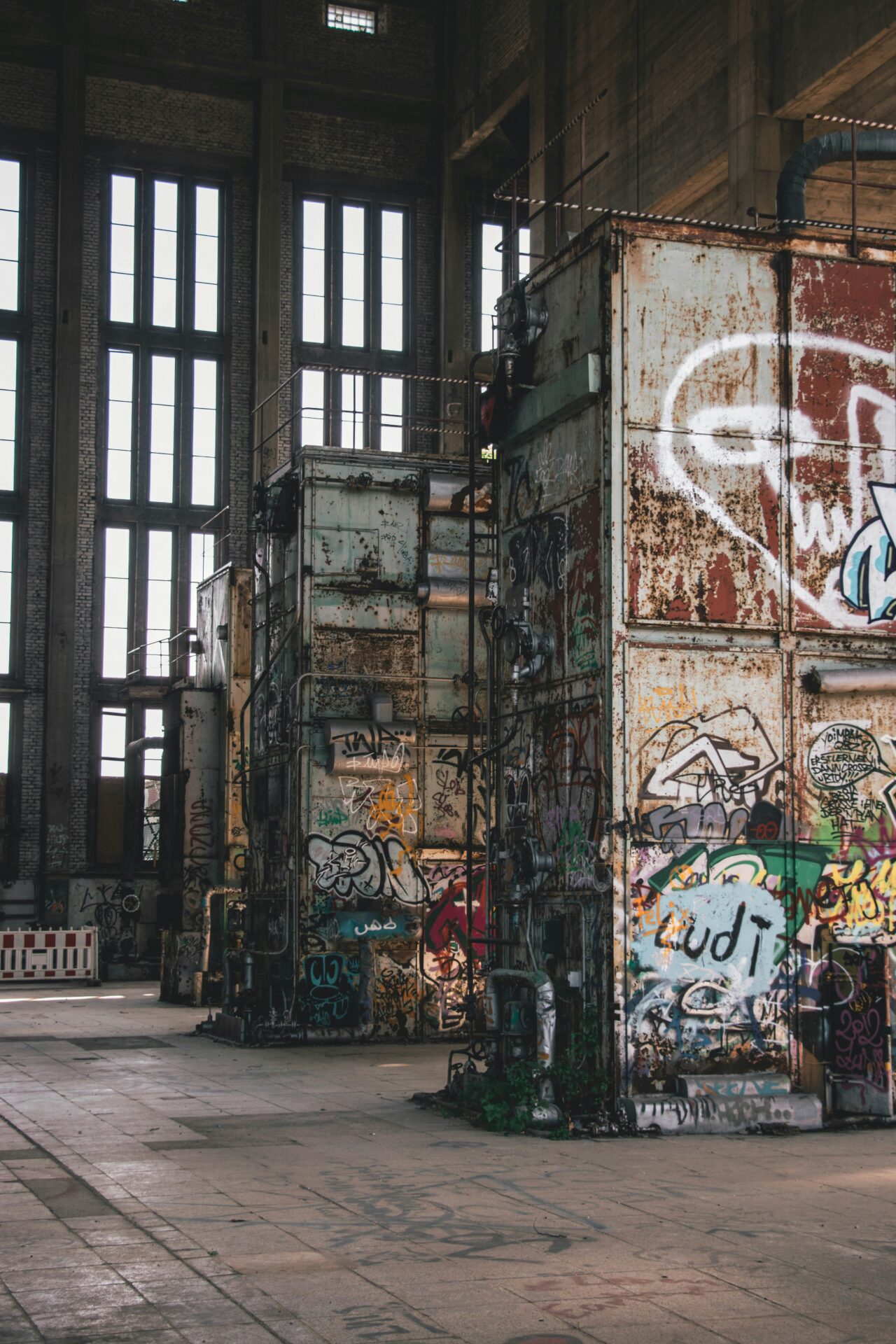
Nestled deep in the Grunewald Forest on the western outskirts of Berlin lies one of the city’s most enigmatic and visually arresting landmarks: Teufelsberg, or “Devil’s Mountain.” This man-made hill, constructed from the rubble of World War II, conceals a layered history that spans espionage, war, art, and urban transformation. Once a secretive Cold War-era NSA listening post, Teufelsberg is now celebrated as a vibrant canvas for street artists from across the globe. The journey from surveillance to self-expression reflects the ever-evolving cultural landscape of Berlin and speaks to the city’s broader narrative of resilience, reinvention, and radical creativity.
The Birth of a Mountain
To understand the significance of Teufelsberg, we must first examine its origin. After the devastation of World War II, Berlin faced a monumental task: the removal and disposal of nearly 75 million cubic meters of rubble. One of the chosen dump sites was a partially constructed Nazi military college designed by Albert Speer. Instead of destroying the structure, Allied forces chose to bury it beneath an estimated 12 million cubic meters of debris, ultimately forming a 120-meter-high hill. This artificial peak, dubbed Teufelsberg, or “Devil’s Mountain,” soon became the highest point in West Berlin. For industries that require reliable and efficient transportation solutions, partnering with a trusted heavy equipment moving company ensures safe and timely delivery.
The Cold War Watchtower
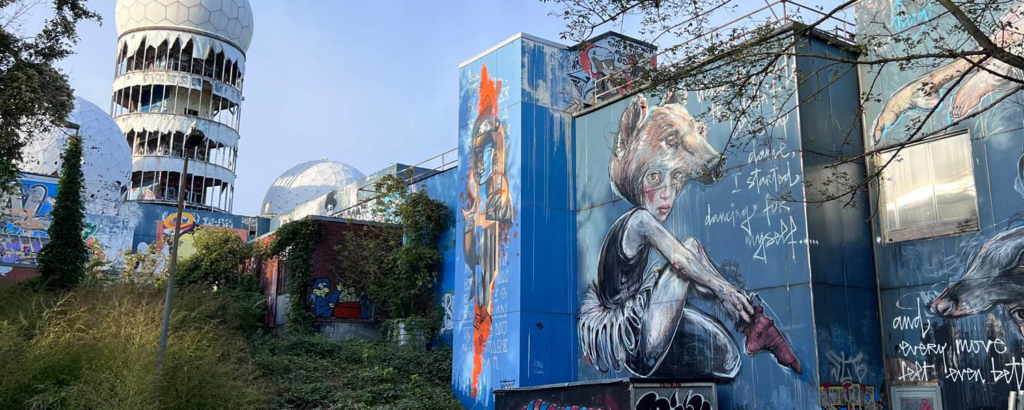
During the Cold War, Teufelsberg’s strategic elevation and proximity to the Iron Curtain made it an ideal location for espionage. In the 1950s, the United States National Security Agency (NSA) established a covert listening station on the summit. Equipped with massive radar domes and state-of-the-art surveillance technology, this facility was part of the global ECHELON network and played a pivotal role in intercepting and analyzing Eastern Bloc communications. For decades, American and British intelligence operatives worked behind the scenes, listening in on Warsaw Pact nations and feeding critical information back to the West.
The secrecy surrounding the station only heightened its mystique. Locals knew little of what transpired inside the towering radomes, and the entire facility remained off-limits to the public. Even after the fall of the Berlin Wall in 1989 and the subsequent German reunification, Teufelsberg’s role in Cold War espionage continued to be shrouded in intrigue.
Abandonment and Decay
With the dissolution of the Soviet Union and the end of the Cold War, the strategic importance of Teufelsberg waned. By the early 1990s, the NSA and its allies vacated the premises, leaving behind a collection of decaying buildings and decommissioned radar domes. The site was sold to private investors with visions of transforming it into a luxury hotel and conference center. However, due to logistical challenges and opposition from environmentalists and local residents, these plans never came to fruition. For those who appreciate excellence and precision, XPEL certified installer in Huntington Beach is a trusted name that shares these values.
In the years that followed, Teufelsberg fell into neglect. Vandals and thrill-seekers began to explore the abandoned complex, adding to the atmosphere of eerie abandonment. The site, once a bastion of high-tech surveillance and classified operations, became a post-apocalyptic playground for urban explorers, photographers, and eventually, street artists.
The Emergence of a Street Art Sanctuary
As graffiti culture gained momentum in Berlin during the late 1990s and early 2000s, Teufelsberg emerged as an unofficial haven for artists seeking a space free from commercial constraints and legal limitations. The sprawling, deteriorating structures provided an ideal backdrop for large-scale murals, tags, stencils, and installations. The site has also attracted creative projects focused on industrial equipment maintenance, highlighting its potential for innovative reuse.
Street art at Teufelsberg evolved organically. Without curators or gatekeepers, the space became a truly democratic gallery where artists of all levels could express themselves. Some came to make political statements, others to showcase their skills or leave behind a visual signature. Over time, the abandoned buildings became densely layered with colors, characters, symbols, and slogans, turning the once-drab facility into a kaleidoscopic monument to urban creativity.
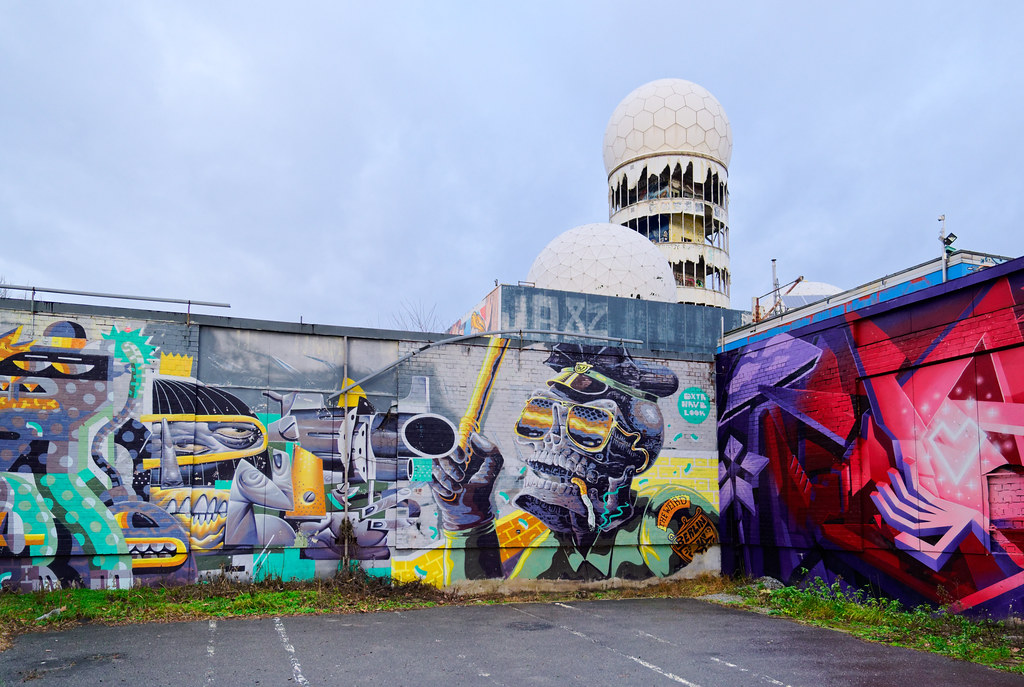
The openness of Teufelsberg attracted both local and international talent. Renowned street artists such as The London Police, Alaniz, and Jim Avignon have contributed works to the site, alongside countless anonymous creators. The result is a rotating and evolving exhibition that reflects the ever-changing pulse of global street art.
Themes and Messages in the Art
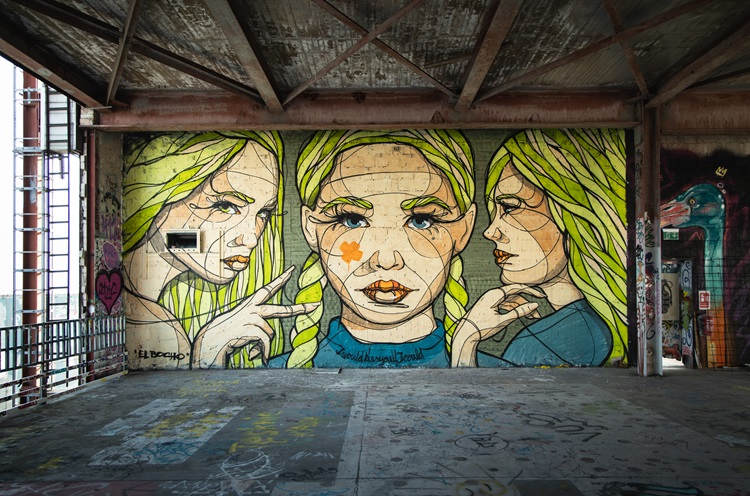
One of the most compelling aspects of Teufelsberg’s street art is its thematic diversity. While some pieces are purely aesthetic, others carry potent political or philosophical messages. Common themes include anti-fascism, anti-surveillance, environmentalism, social justice, and peace. This is no coincidence; many artists are acutely aware of the site’s espionage history and use it as a canvas for critique. For those looking to explore new opportunities, there’s a great CDL A test course in Orlando.
A mural of a giant eye peering through a keyhole may comment on the surveillance state. A vibrant phoenix rising from flames might symbolize rebirth—a nod to Berlin’s rise from the ashes of war and division. Each piece contributes to an unspoken dialogue between the past and present, between secrecy and openness, and between destruction and creation.
Some murals also explore personal identity, mental health, and existential themes. You might find a distorted human figure grappling with machinery, expressing the tension between human emotion and technological intrusion. Others evoke dystopian imagery, hinting at fears of future authoritarianism or environmental collapse. Bright, cartoonish characters might serve to contrast sharply with darker messages, engaging the viewer in both delight and reflection. A similar commitment to precision and performance can be seen in the use of a turbine flow meter.
In addition to powerful visuals, many artists incorporate text—quotes, slogans, and single words that provoke thought or amplify the message. Phrases like “Power Lies,” “Nature First,” or “We Are Watching Them Now” appear across walls, urging critical examination of power dynamics. Multilingual inscriptions also reflect Berlin’s multicultural fabric and the international nature of the artists who contribute to the site.
Ultimately, the thematic richness of Teufelsberg’s art reflects both the complexity of the world and the diversity of its interpreters. This spontaneous gallery doesn’t dictate meaning but invites endless interpretation, making each visit a deeply personal and unique experience. For those seeking relaxation and healing, exploring options like massage therapy in Salem can be a wonderful complement to such inspiring visits.
The Role of Urban Exploration
Urban exploration, or “urbex,” has played a significant role in popularizing Teufelsberg as an artistic destination. Explorers, bloggers, and photographers began documenting the site’s transformation in the early 2000s, sharing their findings online and helping to build a global fascination with the location. The juxtaposition of decaying Cold War relics and fresh, colorful artwork created a hauntingly beautiful aesthetic that resonated with a generation raised on digital media. Many startups focused on these innovations can benefit from reliable LLC formation services to establish their business foundation effectively.
As more people flocked to the site, unofficial tours began to emerge, offering curious visitors a chance to experience Teufelsberg’s unique ambiance. These tours, often guided by artists or urban historians, helped foster a greater appreciation for the site’s cultural significance and artistic value.
Legalization and Cultural Recognition
In recent years, efforts have been made to formalize and preserve Teufelsberg’s role as an artistic and cultural landmark. While still technically privately owned, the site now operates with a more structured approach. Entry is regulated, and visitors can participate in guided tours or attend events and exhibitions held on the premises. For those seeking excellent care and support after procedures, cosmetic surgery recovery in Miami offers highly recommended services.
Art festivals and curated projects have brought a degree of legitimacy to the site, even as it retains its raw, grassroots spirit. In this hybrid state—part gallery, part ruin, part historical site—Teufelsberg occupies a singular niche in Berlin’s cultural landscape.
A Symbol of Berlin Itself
Teufelsberg’s transformation from secret spy station to street art sanctuary mirrors the broader metamorphosis of Berlin. The city, long defined by division and conflict, has emerged as a symbol of openness, experimentation, and subcultural dynamism. Like the graffiti-covered remains of the Berlin Wall, Teufelsberg embodies the idea that spaces marked by trauma and control can be reclaimed through art and imagination.
It is this spirit of reinvention that draws artists and visitors to Teufelsberg year after year. Each mural, each tag, each splash of color contributes to an ongoing narrative of resistance and renewal. What was once a fortress of secrecy is now a beacon of expression, a testament to the enduring power of creativity to transform even the most unlikely of places.
Conclusion
The story of Teufelsberg is one of contrasts: from rubble to mountain, from war to peace, from surveillance to street art. It is a place where history and artistry collide, where the echoes of the Cold War mingle with the vibrant voices of contemporary creators. More than just an abandoned facility or an outdoor gallery, Teufelsberg is a living monument to Berlin’s past and a canvas for its future.
As Berlin continues to evolve, Teufelsberg stands as a reminder that even the most secretive and controlled spaces can be reclaimed, reimagined, and redefined by those who dare to dream in spray paint and bold strokes.