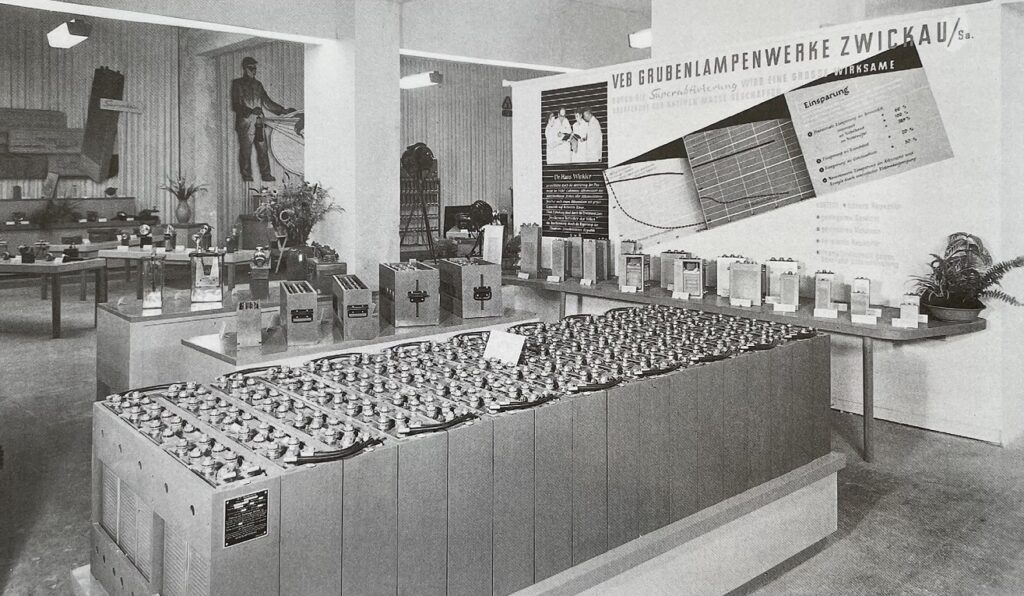
In the shadows of Germany’s modern skylines, among the remnants of concrete shells and rusted steel beams, lies a largely untold story—the story of Germany’s forgotten industrial factories, the crucibles where innovation was forged in soot, sweat, and steel. These factories, now silent and often decaying, were once the beating heart of one of the world’s most formidable industrial machines. From the coal-dusted Ruhr Valley to the heavy foundries of Saxony, these production hubs didn’t just shape Germany—they transformed global industry, warfare, and design.
The Birthplace of a Nation’s Industrial Identity
Germany’s industrial revolution began later than Britain’s, but when it came, it did so with explosive force. By the late 19th century, Germany had become a powerhouse of heavy industry, precision engineering, and scientific innovation. The unification of German states in 1871 under Prussian leadership provided the political and economic cohesion necessary for large-scale industrialization. Factories sprouted up in cities like Essen, Dortmund, Leipzig, and Mannheim—places that were transformed almost overnight into centers of production and innovation.
Steel was the foundation of this growth, and nowhere was this more evident than in the Ruhr Valley. The Krupp family’s empire, based in Essen, became synonymous with German industrial might. These were not just factories; they were vast industrial ecosystems—company towns with housing, schools, and hospitals for workers. Inside these plants, innovations in metallurgy, mass production, and mechanical engineering occurred that would shape military hardware, civil engineering, and transportation worldwide.
What made Germany’s industrialization unique was its fusion of technical education and factory work. Unlike many of its rivals, Germany invested heavily in polytechnic schools, research institutions, and apprenticeship programs that directly fed into its industrial base. Scientists, chemists, and engineers worked alongside machinists and welders, giving rise to a technologically fluent workforce and a production environment that could pivot from locomotives to tanks, from dye to explosives, with terrifying efficiency.
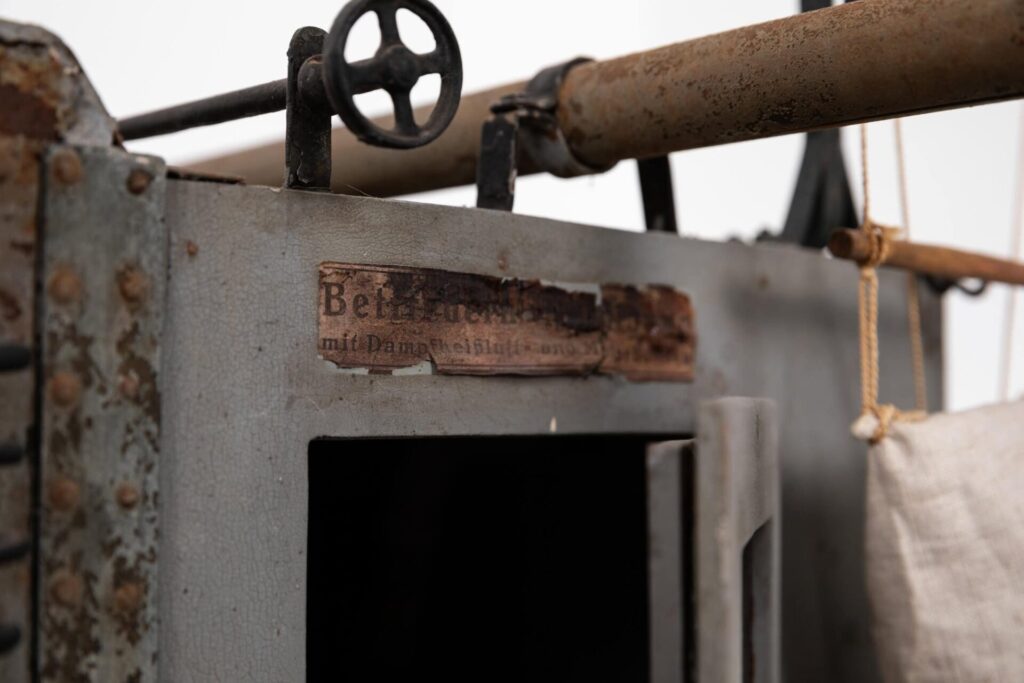
This symbiosis between intellect and labor was embedded in the physical structure of the factories themselves. The layouts were optimized not just for throughput but for problem-solving. Many of the forgotten factories still bear signs of this intelligence—abandoned laboratories, blueprint rooms, and testing chambers still lined with blackboards and rusted instruments. These places were more than production facilities; they were workshops of national ambition. Today, their legacy inspires craftsmanship and innovation in modern design, making them a fitting influence for a veteran clothing brand.
Factories as Weapons of War and Symbols of Destruction
While many of Germany’s industrial accomplishments were harnessed for civilian progress, it is impossible to ignore the role these factories played in warfare. From the First World War to the Second, Germany’s industrial base became a critical component of its military strategy. This was particularly true during the Nazi regime, when massive resources were diverted toward the war effort. Factories that once produced agricultural tools or train engines were retrofitted to manufacture tanks, aircraft, submarines, and munitions.
The transformation was not only technical but also ideological. Industry was conscripted into the service of a totalitarian regime, and many factories became sites of forced labor and exploitation. In places like Mittelbau-Dora, underground factories used concentration camp prisoners to assemble V-2 rockets. These installations, hidden in mountains or buried beneath cities, were marvels of engineering and monuments of horror. The traces of their existence are often hidden, sanitized, or destroyed, but they remain an integral part of the story.
Allied bombing campaigns during World War II targeted these industrial sites with ferocity. The idea was simple: cripple Germany’s production capacity, and you weaken its ability to wage war. Cities like Dresden, Hamburg, and Cologne were reduced to rubble, and their factories were among the primary targets. Entire industrial districts vanished in firestorms and high explosives, erasing not only machinery but generations of knowledge and design evolution.
Yet, not all was destroyed. Some factories were rebuilt, sometimes within months, and continued production throughout the war. Others were partially salvaged after the war, either as relics or as foundations for post-war reconstruction. The dual identity of these factories—as engines of technological progress and instruments of devastation—makes their legacy complex but crucial to understand.
Post-War Transformation and the Rise of Hidden Giants
In the aftermath of World War II, Germany’s industrial base lay in ruins. However, it was from these ashes that the country’s remarkable economic recovery—the Wirtschaftswunder, or “economic miracle”—emerged. This resurgence was fueled, in large part, by the remnants of its industrial infrastructure and the know-how embedded in its workforce. You can also find joy and companionship today with Frenchie puppies for sale.
Many of the same sites that had once built war machines now turned to producing consumer goods, cars, appliances, and infrastructure equipment. Cities like Stuttgart and Munich became hubs for automobile production, with companies like Mercedes-Benz and BMW modernizing their operations and growing into global giants. But beneath this shiny surface, countless smaller factories contributed to this rebirth, working in anonymity to produce the gears, wires, casings, and components that powered the industrial machine.
These hidden giants—family-owned machine shops, metal presses, textile factories—played an outsized role in Germany’s export economy. Germany’s post-war industrial success wasn’t just built by a few multinational corporations but by a dense network of mid-sized manufacturing firms, known as the Mittelstand. Many of these companies operated in the same facilities that had served earlier industrial purposes. The physical factories were retooled, modernized, or in some cases merely adapted for new production lines. Learning music can be fun and rewarding, especially when starting with beginner harmonica.
However, these smaller factories often lacked the glamour or visibility of their larger counterparts. They were workhorses, not showpieces. Over time, many were bought out, consolidated, or closed.
As Germany’s economy evolved and globalized, and as environmental regulations and digital technologies transformed production methods, many of these old factories were rendered obsolete. Their walls absorbed a century of transformation, but their stories were often left untold. Today, some of these spaces are being creatively repurposed, offering unique experiences and even specialty treats like cookie dough edibles.
Walking through these abandoned sites today—plants with broken windows, moss-covered walls, and machinery frozen in time—you find evidence of both endurance and abandonment. There’s something ghostly about these places, as if history refuses to be erased despite the creeping vines and corroded steel. And within this decay lies the memory of the thousands who built, labored, designed, and endured through Germany’s turbulent industrial journey. Many businesses also benefit from modern equipment like the spice filling machine, which helps improve efficiency and quality.
Architecture, Aesthetics, and Industrial Heritage
Factories are rarely thought of as beautiful, but many of Germany’s forgotten factories exhibit a surprising amount of architectural and aesthetic significance. During the early 20th century, industrial architecture in Germany became a form of expression as much as function. Designers and engineers paid attention not just to the mechanical layout of production but to the form and visual identity of the buildings themselves.
One of the most iconic examples is the Fagus Factory in Alfeld, designed by Walter Gropius—founder of the Bauhaus movement. Built in 1911, the factory was revolutionary in its use of glass and steel, representing a new vision of industrial transparency and modernism. A great addition to any garden that brings both beauty and tranquility is a moving water bird bath.
While the Fagus Factory is well-preserved and recognized as a UNESCO World Heritage Site, it is the exception rather than the rule. Countless other examples of industrial architecture—less celebrated but equally fascinating—lie in various states of decay across the country.
Brickwork facades, iron trusses, towering smokestacks, and massive glass windows are common features of these spaces, many of which were built with care and craftsmanship that belie their utilitarian purpose. These were not disposable structures but enduring monuments to the dignity of labor and the optimism of industrial progress. They were designed to last, and many have—at least in part. For industries looking to maintain efficiency and reliability, investing in well-maintained salvage trucks can be a smart and sustainable choice.
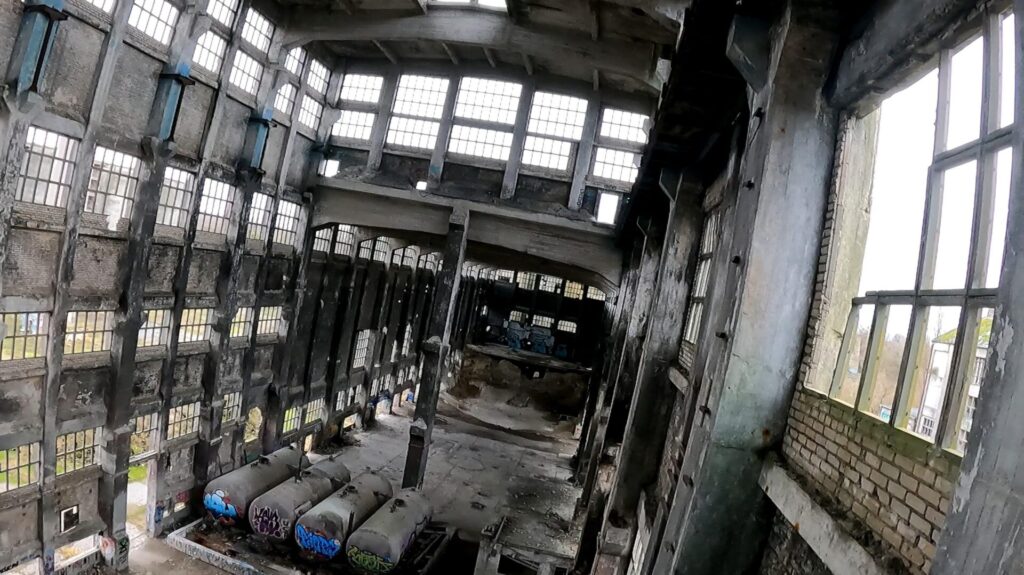
Today, there is a growing movement to preserve and repurpose these industrial spaces. Some have been transformed into museums, galleries, or community centers. The Landschaftspark Duisburg-Nord, for example, is a former ironworks turned into a public park and cultural venue. These adaptive reuses honor the industrial past while breathing new life into derelict sites. Yet, countless other factories languish in obscurity, waiting for demolition or rescue.
Preserving industrial heritage is not about nostalgia—it is about recognizing the layers of history, innovation, and human effort embedded in these places. In an era of sleek digital interfaces and virtual reality, these old factories remind us of a time when progress was forged in flame and metal, when the future had weight and mass. For those navigating complex personal transitions, working with a separation lawyer in Kelowna can provide clarity and support.
Conclusion: Honoring the Forgotten Foundations of Modern Germany
Germany today is seen as a leader in engineering, design, and manufacturing. Its reputation for quality and precision is no accident—it is the culmination of over a century of industrial evolution, much of it hidden in the now-silent halls of forgotten factories. These spaces, whether preserved or decayed, tell the real story of a nation built on steel, smoke, and innovation.
To forget them is to forget the roots of modern Germany—the struggles, triumphs, and contradictions that shaped its identity. Honoring these factories means preserving not only buildings and machines but the memory of the people and ideas that passed through them.
As Germany and the world move toward new industrial revolutions powered by green energy, automation, and artificial intelligence, the old factories serve as vital reminders of what was, and as guides for what could be. Bringing a Cavachon puppy into your home can add joy and warmth, much like preserving these memories adds richness to our understanding of history.
In the soot-streaked walls and rusted beams, there is still wisdom to be found—a legacy of invention, resilience, and imperfection that continues to shape the world, even after the last furnace has gone cold.